
Blog
Picture Copyright, Explained for People Who Publish Pictures for a Living
5 min read
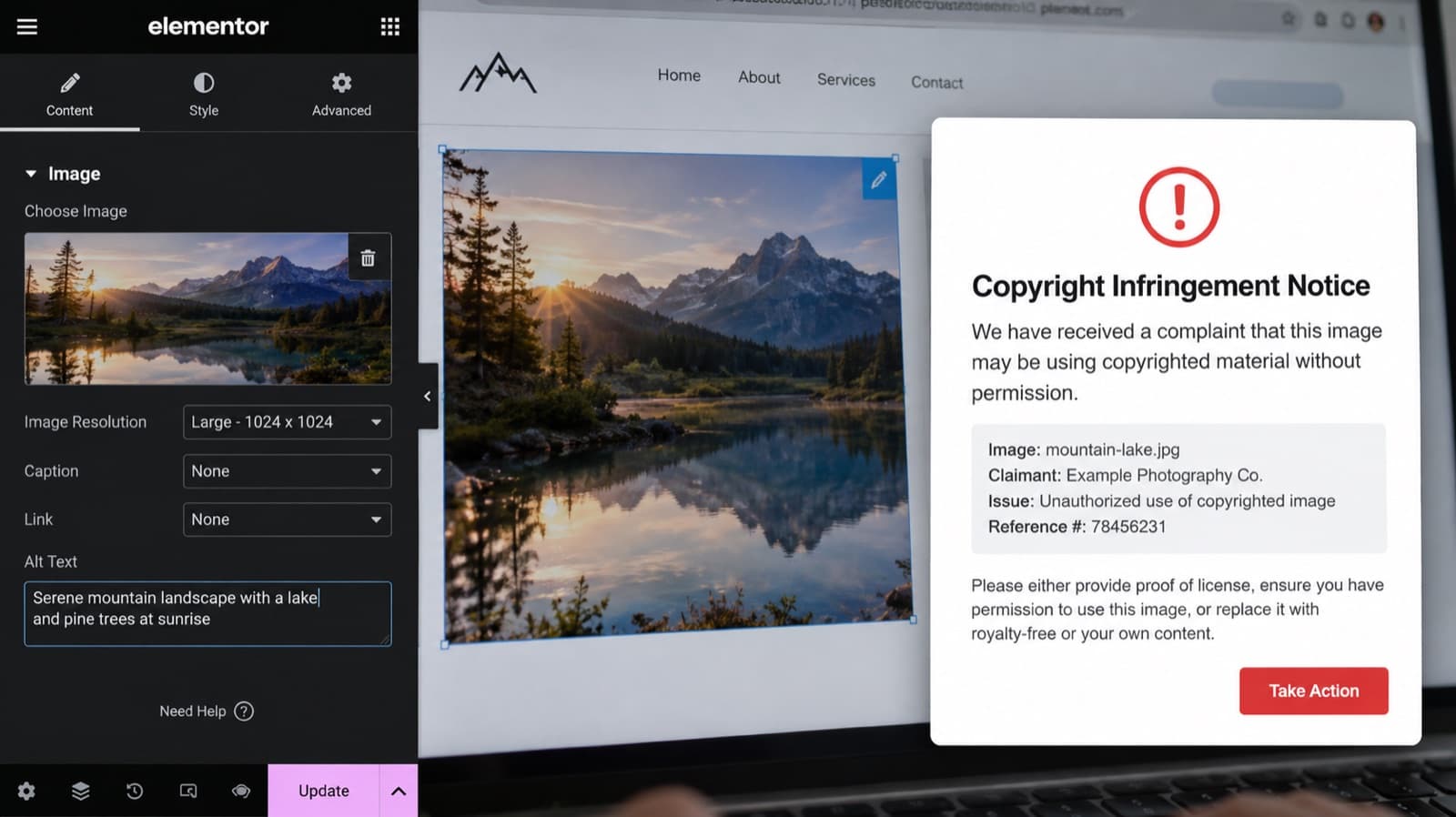
Most guides to picture copyright are written for photographers. Useful if you take pictures. Less useful if your job is putting them on websites by the hundred and hoping none of them turn into a problem.
So this one is written the other way round. Five things about picture copyright that marketing teams consistently get wrong, each of which has cost somebody real money.
You paid the photographer. You probably do not own the photos.
Start here, because this one surprises people who have been in the industry twenty years.
In the US, a commissioned photograph does not automatically belong to the client. Work made for hire has two routes: the work was made by an actual employee within the scope of their job, or the work falls into one of nine specific commissioned categories with a signed written agreement saying it is work made for hire. The nine categories are oddly specific things like translations, atlases, tests and contributions to collective works. Photography is not on the list.
Which means that unless your photographer was on payroll, or you have a written assignment of copyright, the photographer owns those images and you hold a licence whose terms you may never have read. Plenty of shoot agreements grant broad perpetual use and everything is fine. Plenty of others grant one campaign, one territory, eighteen months, and nobody noticed because the invoice said "photography" and got paid.
Go and look at your last three shoot contracts. It takes ten minutes and it is the highest value ten minutes in this article.
It lasts longer than you think, and "old" is not a licence
For anything made after 1978 by a named photographer, copyright runs for their life plus seventy years. For work made for hire, it is 95 years from publication or 120 from creation, whichever ends first.
In practice the number people actually need is the public domain line, and it moves one year every January. As of 2026, published works from 1930 and earlier are free in the US. That 1950s advertising photograph your designer found and loved is not public domain. Neither is the 1970s street scene. A photographer who died in 1980 has pictures protected until 2051.
Age makes an image feel safe. It does almost nothing legally.
A licence is not the only permission you need
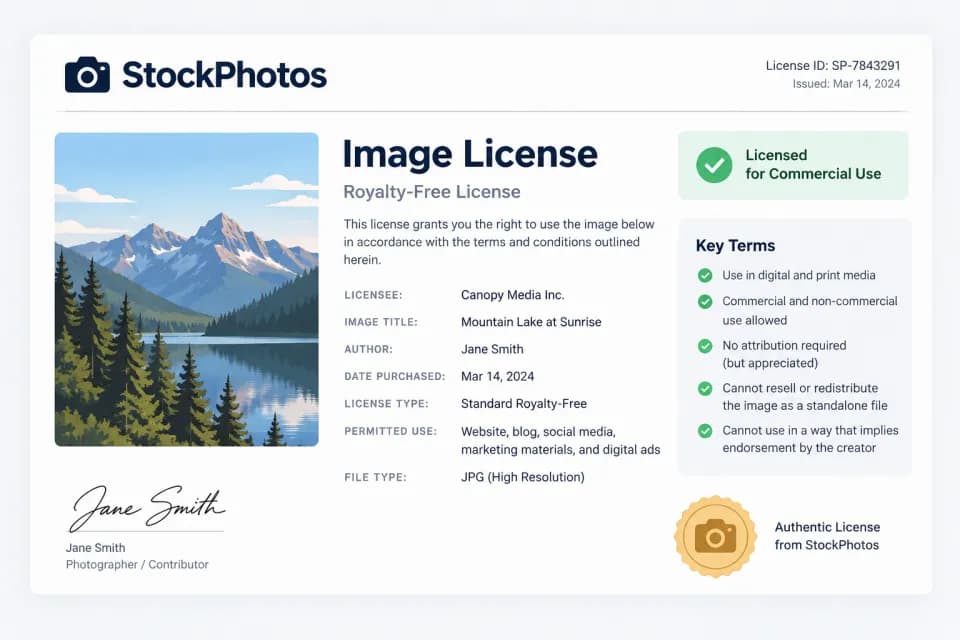
This is the one that catches good teams who did everything right.
You can buy a photo entirely legitimately, from a real stock library, with a clean receipt, and still not be allowed to use it in an ad. Copyright is permission from the person who took the picture. It says nothing about the people in it.
That second permission is a model release, and for buildings and private property it is a property release. Getty's own guidance puts it plainly: releases ensure the people and property owners depicted have given permission for non-editorial use. Editorial content, which covers news, sport, documentary and archival material, generally does not carry those releases, so it cannot be used for commercial, promotional, advertorial or endorsement purposes.
Here is how that goes wrong in real life. Someone needs a crowd shot for a landing page. They find a great one in the library, it is properly licensed, it goes live. The page is promoting a product, which makes the use commercial, and the image was editorial only. Everything about the purchase was correct and the use is still a problem.
If a picture has recognisable faces or a recognisable building and it is going anywhere near a sales message, check the release status, not just the licence.
Embedding is not the loophole people think it is
Marketers love an embed. Pull the Instagram post in, no file on your server, nothing copied, surely nothing infringed.
Courts disagree with each other about this, which is worse than a clear no.
The Ninth Circuit applies what is called the server test, where liability attaches to whoever actually hosts the file. Embed someone's photo in California and you are on relatively solid ground. The Southern District of New York rejected that reasoning in Goldman v. Breitbart, holding that technical distinctions invisible to the user should not decide the case, and courts in Utah and the Western District of Texas have since gone the same way, with a 2025 decision there finding that a display happens regardless of the method.
So the same embed is defensible in one venue and exposed in another. That is not a loophole, it is a coin flip you do not control, because you do not choose where you get sued.
The four myths that still cost money
Short, because these should not need explaining and somehow still do.
Crediting the photographer is not a licence. It is good manners attached to an unlicensed use. Finding something on Google is not permission, since Google is a search engine and not a rights clearing house. Taking an image down after a complaint does not undo the use that already happened, though it certainly helps the conversation. And there is no percentage rule, no thirty second rule, no "changed it by 20 percent" rule. Fair use is a genuine legal doctrine weighed across four factors by a judge, not a quota you can hit by cropping.
Statutory damages in the US reach $150,000 per work for wilful infringement, which is why these myths get expensive rather than merely embarrassing.
What to actually do with all this
None of the above is hard to understand. The hard part is that it applies to every single image you have ever published, and almost nobody has that list.
The practical version is unglamorous. Know what is on your site. Know where each image came from. Know which permission you hold for it, licence or assignment or release, and know where that paperwork lives. Teams that can answer those four things never have a picture copyright problem, not because they are more careful, but because they can prove it in an afternoon.
That is an inventory job, and it is the thing our scanner is built to do. The free preview covers five images on one site with no card, which is usually enough to tell you whether your library is in decent shape or whether you have some reading to do.
None of this is legal advice, by the way. A real dispute deserves a real lawyer. Everything above is the groundwork that stops you needing one.